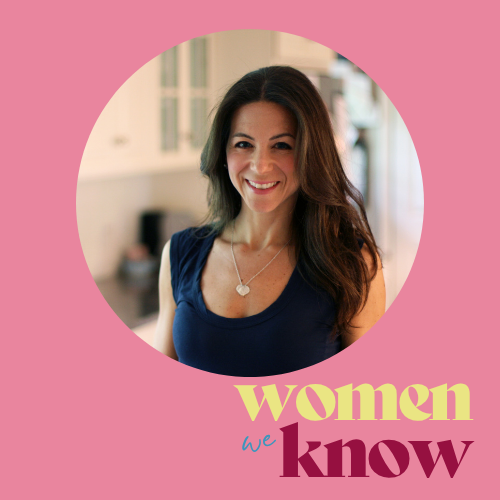
Jenni Benerofe has spent years proving that great cooking isn’t about perfection—it’s about confidence, connection, and bringing people together. As the founder of The Balaboosta Chef, she’s taught thousands of home cooks how to feel more comfortable in the kitchen while building a business that’s expanded from cooking classes to recipe development, catering, and her packaged food brand, Happiness Jones. Through it all, her philosophy has remained the same: cooking should be approachable, joyful, and something everyone can do.
In this edition of Women We Know, Jenni shares the winding path that led her to a second-act career, the lessons she’s learned as an entrepreneur, why perfection has no place in the kitchen, and how sharing a meal can create some of life’s most meaningful moments.
Q: You’ve built a career around making cooking feel approachable, fun and completely doable. What was your own journey from food lover to private chef and culinary instructor?
I fell in love with food when I moved to NYC after graduation. It happened slowly at first, by eating in as many restaurants as I could (barely) afford and appreciating everything about the dining experience. When I met my husband, he encouraged me to quit my job and go to culinary school, with the intention of becoming a food writer. I figured I should understand the fundamentals of cooking if I was going to write about it with any sort of expertise. After a few stints in a catering kitchen, I started a family and put my culinary career on hold. I didn’t find my way back to the food world until years later, when I was asked to teach a cooking class for the moms of the local preschool association. I felt incredibly underqualified, but gave it a shot with the most ridiculously ambitious menu of dishes you could imagine. I think I crammed 12 recipes into two hours. But I knew I had something going when all the moms asked how they could take another class with me. So in one night, the Balaboosta Chef was born. It’s since evolved into many different businesses, from cooking classes to meal delivery to catering to recipe testing to consumer packaged goods, but it has never deviated from the core credo it was built on that you referenced earlier: that cooking should be approachable, easy, and fun!
Q: You’ve taught thousands of clients how to cook with confidence – including me. I originally found your pantry confessionals during the pandemic and still make your scallion pancakes! What is the biggest misconception women have about being “good” in the kitchen?
We are all way too hard on ourselves. I wish I could remind women that everything from prep to cook to presentation does NOT have to be perfect in order for the dish to be successful. Feeding our families, something we all have to do every single night, should not be such an impossibly high bar that it discourages them from even starting. This is my job, and even I fall short sometimes. My mom is the best hostess I know, mostly because of how she makes people feel while they’re sitting around her table. No disrespect to your cooking, Mom! But what I mean is this: the real meaningful part of cooking and eating and enjoying food often has nothing to do with how delicious or pretty or impressive the meal is. So try not to focus on that.
Q: Your approach to food is clean, healthy, and creative—but never fussy. How do you help busy women let go of perfection and simply enjoy cooking again?
I always tell my clients that my entire job is based on failure. I will test a dish nine times and the only reason it works on the tenth try is because of what I learned each time it didn’t.
Failing up is the only way to learn and get better. We also have to remember that cooking is a muscle. The more you do it, the stronger you become in the kitchen. What do you tell your kids when they want to be a better hockey player or artist? Practice! Get out there! So just put your dish on the table and be proud of it. Muffle the inner voice that wants to tell the entire table the chicken is dry, the broccoli is overcooked and the cheese is burnt before they even take one bite. Lastly, find the barrier of entry or the pain point and work around it. Hate knife skills? Buy prechopped vegetables. Afraid of raw chicken? Use gloves. Worried you’ll undercook your meat? Use a thermometer. There’s no award for struggling. Make your life as easy as you need to!
Q: Happiness Jones was inspired by your husband’s Type 1 diabetes diagnosis and your determination to create a cookie with integrity and incredible taste. What did that journey teach you about persistence and entrepreneurship?
First, I learned to say yes and figure it out later. I didn’t let the unknown logistics get in the way of a good idea. Just tackle each issue as it comes, because if you wait until you’ve got it all covered, the market window closes and you lose your nerve. The first few years, each cookie was packaged in generic clear plastic bags from Amazon and I hand-stickered the seal on each bag myself. That was some real sweat equity, let me tell you. When we got picked up by our first retailer, we met the moment and designed “real” packaging with nutritional information, UPC codes, and upgraded to the ease of a commercial hot sealer. Second, talk to anyone and everyone about your business. When renting a ghost kitchen space was a profit margin I couldn’t afford to part with, a casual conversation with a family friend in the restaurant world led to a genius suggestion to reach out to my local temple to use their rarely used legal commercial kitchen to bake my cookies. I bartered cooking classes for kitchen use and solved a pretty big problem in a way I never would have come up with myself. You never know where one connection or recommendation will lead. Third, know where your voids are and either outsource or learn how to do them yourself. I could sit in the kitchen and play around until the perfect cookie was born, but I can’t design and lay out a website. So I hired my husband, a trained graphic designer, to do all things visual. My daughter, a Photography major at NYU Tisch, shoots a lot of my video content. I’m smart enough to know what I don’t know and also understand that I can’t do it all myself.
Q: Food is about so much more than what’s on the plate. How has cooking helped you create connection, comfort, and meaningful memories with the people you love?
Oh man. The connection shared over a meal is EVERYTHING. We all lead such busy lives with pick-ups and drop-offs and errands and work. Cooking is a ritual that forces us to stop multitasking and really be present in the moment. You’ve got to use all of our senses in the kitchen. Breathing in the intoxicating aroma of garlic sizzling in hot oil, pausing after a spoonful of tomato sauce to adjust for seasoning as the flavors develop, even stirring the pot can be comforting if you let it. And then there’s sitting down to the meal itself. Breaking bread with people we love, without phones or TV shows, turns food into something so much more than just dinner. The experience of sitting down at the table together fosters meaningful connection, inspires screenless conversation, and nourishes the soul. The Spaniards have a word for it: sobremesa. It means sitting at the table together long after the food is gone to share stories, laugh, drink coffee, or have a cocktail. It’s my favorite part of eating together; I remember that experience way more than I do any specific part of the meal.
Q: Many women in midlife are launching second acts and passion projects. What gave you the confidence to turn your culinary expertise into both a thriving teaching business and a packaged food brand?
I’m not sure if it’s confidence or a fear of living life with regret. To anyone who’s wavering on launching a second act: What are you waiting for? What’s the worst that can happen? There really is no such thing as failure. Sometimes you win, and sometimes you learn. But you never lose when you put yourself out there and give something a try. To paraphrase Brené Brown’s brilliant take on vulnerability that really speaks to me: I’d rather be down in the arena, publicly making mistakes, coming up short but continuing on regardless, than sit in the cheap seats watching someone else dare to live their dream. Kind of a dramatic take when you’re just talking about food but Brené is a badass!
Q: What are the three ingredients you always have in your kitchen, and what do they say about your personality?
I had to refer to my husband, Jory, on this one, for a more objective opinion. Not to mention, narrowing down my favorite ingredients was a real Sophie’s Choice moment for me. For the record, he came up with this list in under two minutes!
Kosher salt because it enhances the existing flavor of whatever you’re cooking. Jory says I have the natural ability to extract confidence and culinary flair out of my cooking students that they didn’t know they had.
Lemons because they bring a brightness and sharpness that wakes you up. They’re super versatile, and each part can be used in so many ways. Jory says I use myself in lots of different ways to bring the experience to life for people. It’s not polarizing, but it brings brightness to everything it touches.
Chocolate, because if there’s no sweetness in what you’re doing, it’s not worth doing at all. Food brings a sense of joy to people, and my husband thinks I do too. I don’t think I’ve ever gone a day of my life without eating chocolate, and I don’t plan on breaking that streak!
Feeling inspired? Check out recipes for a delicious dinner that Jenni created for us.