By Michelle Kavall APRN FNP-C AFMCP
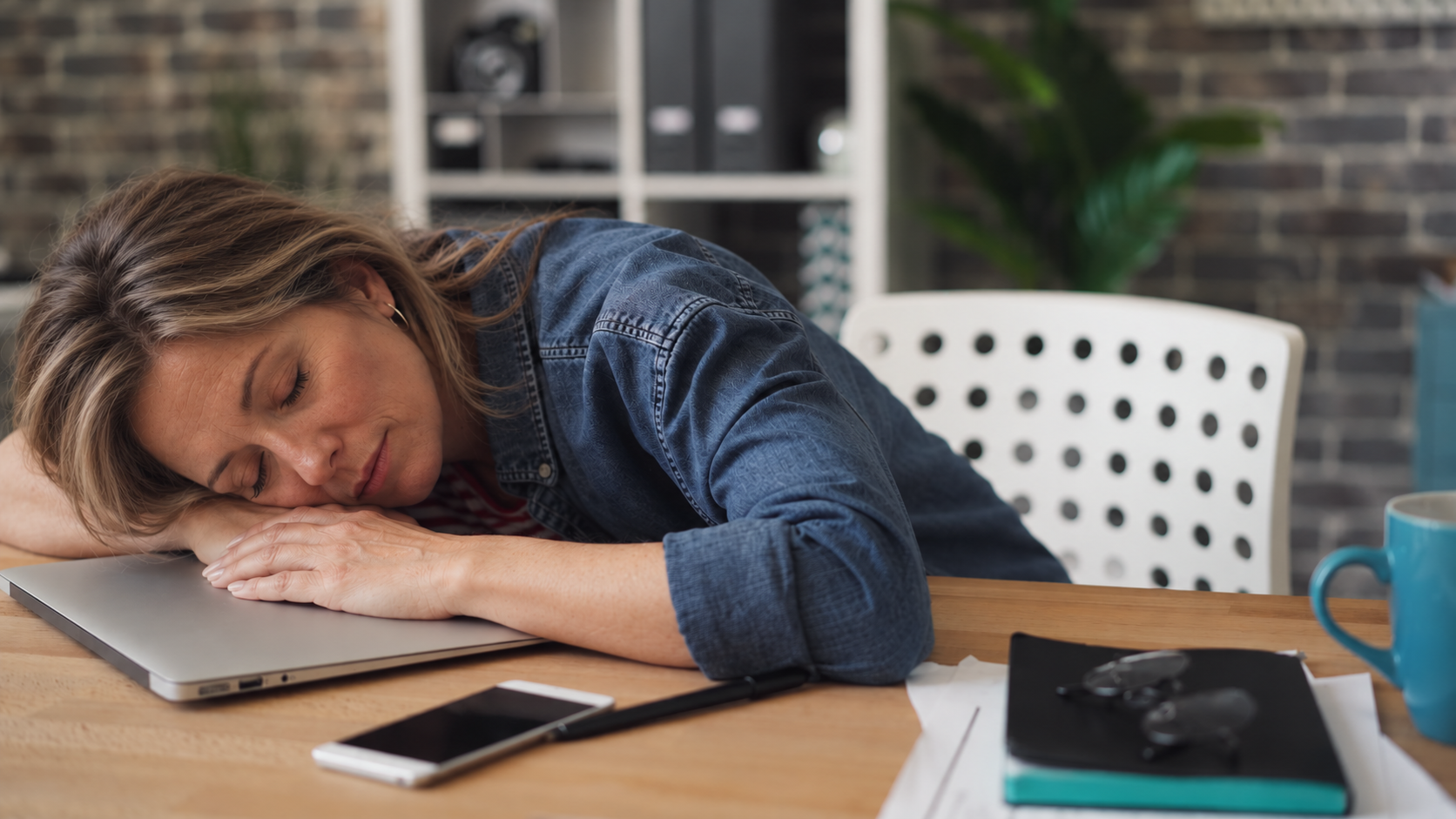
You went to bed at a reasonable hour. You slept, technically. Yet by midafternoon, your energy has disappeared, your concentration is fading, and deciding what to make for dinner feels like a major undertaking.
Fatigue during perimenopause is common, but it is also frequently misunderstood. Women are often told they are stressed, doing too much, or simply getting older. Sometimes those factors are part of the picture. But persistent exhaustion that interferes with work, relationships, exercise, or daily life deserves more than reassurance and another cup of coffee.
Perimenopause is the transitional period leading up to menopause, which is officially reached after 12 consecutive months without a menstrual period. This transition often begins in a woman’s 40s, although symptoms can appear earlier. Periods may still look fairly regular at first, which is one reason women do not always connect changes in energy, sleep, mood, or concentration with their hormones.
Estrogen and progesterone do not simply decline in a straight line during perimenopause. Their levels can vary considerably from one cycle to the next. These hormonal shifts may affect sleep, temperature regulation, mood, and the way a woman feels throughout the day.
The Sleep Connection
One of the clearest links between perimenopause and fatigue is sleep.
Women may begin waking several times during the night, struggling to fall back asleep, or sleeping for eight hours without feeling restored. Hot flashes and night sweats can cause repeated awakenings, even when they are not fully remembered the next morning.
Research shows that difficulty staying asleep becomes more common during the menopause transition. Vasomotor symptoms, which include hot flashes and night sweats, are an important contributor. Hormone therapy may improve sleep for some women, particularly when those symptoms are responsible for nighttime awakenings.[1]
Sleep is not the only issue. Changes in mood and cognitive function can also contribute to the feeling of being depleted. A 2024 systematic review and meta-analysis found that women in perimenopause had a significantly higher risk of depressive symptoms and diagnoses than premenopausal women.[2]
Depression does not always look like obvious sadness. It may appear as irritability, poor concentration, low motivation, loss of interest, or persistent exhaustion. Anxiety can be equally draining, especially when it keeps the mind running long after the rest of the house has gone to sleep.
At Longévité Palm Beach, we look at fatigue as part of a larger pattern rather than treating it as an isolated complaint. Hormonal changes may be involved, but sleep quality, stress, nutrition, thyroid function, blood-sugar regulation, mood, and other health conditions must also be considered.[3]
Fatigue Is a Symptom, Not a Diagnosis
Although the timing may point toward perimenopause, not every case of midlife fatigue is caused by hormonal changes.
Iron deficiency is an important consideration, particularly when periods have become heavier or more prolonged. Thyroid disease, vitamin B12 deficiency, diabetes, medication side effects, chronic illness, depression, and anxiety can all produce similar symptoms.
Sleep apnea is another frequently overlooked cause. Women do not always present with the loud snoring or dramatic breathing pauses commonly associated with the condition. Morning headaches, insomnia, daytime sleepiness, brain fog, and waking without feeling refreshed may be the more noticeable signs.
This is why simply labeling fatigue as “hormonal” can be just as unhelpful as dismissing it altogether.
A careful evaluation should begin with the pattern. When did the fatigue start? Is it constant, or does it change during the menstrual cycle? Have periods become heavier, lighter, shorter, or less predictable? Are there hot flashes, night sweats, palpitations, headaches, mood changes, or difficulty staying asleep? Does rest improve the exhaustion, or does it remain no matter how much sleep you get?
Depending on the symptoms and medical history, testing may include a complete blood count, iron and ferritin, thyroid markers, vitamin B12, vitamin D, and metabolic screening. More testing is not automatically better. The goal is to choose tests that answer a specific clinical question.
Hormone testing can sometimes add useful information, but one blood test does not always capture what is happening during perimenopause. Estrogen and follicle-stimulating hormone levels may change substantially across the menstrual cycle. Symptoms, cycle history, age, medical history, and patterns over time often provide more useful information than a single result.
That confusion is one reason I created The Perimenopause Edit, a free introductory guide for women navigating this transition. It explains common symptoms, what else should be considered, which changes deserve prompt medical attention, and the treatment options that may be discussed with a healthcare provider. The goal is not to encourage women to diagnose themselves. It is to help them recognize patterns, ask better questions, and have a more informed conversation about their health.[4]
Getting Your Energy Back
Treatment depends on what is driving the fatigue.
Regular movement can help support sleep, mood, muscle mass, and metabolic health. Resistance training is especially valuable during midlife, when women begin losing muscle more easily. Consistent meals containing adequate protein, fiber, and healthy fats may also help reduce dramatic swings in hunger and energy.
Alcohol deserves an honest look. It may make falling asleep easier, but it can fragment sleep later in the night and worsen hot flashes in some women. Caffeine can certainly help on a difficult morning, but using it throughout the afternoon may quietly perpetuate the problem.
For women experiencing bothersome hot flashes or night sweats, menopausal hormone therapy may be appropriate after an individualized discussion of symptoms, health history, benefits, and risks. The Menopause Society identifies hormone therapy as the most effective treatment for vasomotor symptoms, but the medication, dose, route, and duration should be tailored to the individual.[4]
Hormone therapy is not a universal treatment for fatigue. However, when night sweats and hot flashes are repeatedly interrupting sleep, treating those symptoms may improve daytime energy. Effective nonhormonal options are also available for women who cannot or prefer not to use hormones.
The most important point is that midlife fatigue should not be treated as a personal failure. It is not proof that you have become lazy, unmotivated, or incapable of keeping up. It is a signal worth investigating.
And if someone tells you that feeling exhausted every day is simply part of being a woman, feel free to conserve your limited energy and ignore them.
References
- Baker FC, Lampio L, Saaresranta T, Polo-Kantola P. “Sleep and Sleep Disorders in the Menopausal Transition.” Sleep Medicine Clinics. 2018. PubMed
- Badawy Y, Spector A, Li Z, Desai R. “The Risk of Depression in the Menopausal Stages: A Systematic Review and Meta-Analysis.” Journal of Affective Disorders. 2024. PubMed
- Longévité Palm Beach. “Perimenopause and Fatigue: What Your Body Is Telling You.” Longévité Palm Beach
- The North American Menopause Society Advisory Panel. “The 2022 Hormone Therapy Position Statement of The North American Menopause Society.” Menopause. 2022. PubMed
- Kavall M. The Perimenopause Edit: An Introductory Guide. Longévité Palm Beach. Read the guide
Michelle Kavall, FNP-C, FMACP, is a Board-Certified Family Nurse Practitioner, Functional Medicine Specialist, and founder of Longévité Palm Beach. With a focus on female-first care, she combines advanced diagnostics and evidence-based medicine to uncover the root causes of hormone imbalances, fatigue, gut issues, and other chronic symptoms. Her personalized approach integrates nutrition, lifestyle, and targeted therapies to help women restore balance, improve energy, and support long-term health and longevity.
Still trying to figure out what perimenopause is doing to your body? Visit our Menopause Library for more expert advice and real-life conversations about navigating the transition.