Just when we thought menopause had already claimed our sleep, moods, metabolism and ability to remember why we walked into a room, our gut health decided to join the party.
Bloating, constipation, reflux and foods that suddenly seem to disagree with us can become more noticeable during perimenopause and menopause. But what do shifting hormones actually have to do with our digestive system, and what can we do about it?
We asked a gastroenterologist, dietitians and nutrition and wellness professionals what might be happening, which changes are worth trying and when to get medical help. Because at this point, we have enough going on without our stomach picking a fight, too.
What Do Hormones Have to Do With It?
Hormones can influence digestion, but the relationship is more complicated than “less estrogen equals more bloating.”
Adam Pont, MD, a board-certified gastroenterologist with Medical Offices of Manhattan and contributor to LabFinder, explains that fluctuations in estrogen and progesterone can affect how contents move through the digestive tract. Changes in that movement may contribute to constipation or bloating.
He also notes that some studies have found differences in the gut microbiome during the menopause transition. What those differences mean for symptoms, however, is still being investigated. Foods becoming harder to tolerate may also involve aging or other factors rather than menopause alone.
Dietitian Gretchen Terry-Leonard, author of Your Second Prime and co-founder and Chief Strategy and Impact Officer of The Center for Deeply Human Leadership, points to another connection: the estrobolome.
Despite sounding like something else we now need to maintain, the estrobolome refers to gut microbial genes involved in metabolizing estrogens. Certain bacteria produce enzymes that allow some estrogen processed by the liver to return to circulation rather than leave the body. Terry-Leonard describes it as “metabolic regifting.”
That doesn’t mean a particular food or supplement will restore estrogen levels. Researchers haven’t established an ideal gut composition for estrogen metabolism or a diet that reliably changes it to relieve menopause symptoms.
“Midlife gut problems are not always just a gut problem,” says Justin Kempf, an integrative health practitioner, functional health coach and founder of Executive Functional Healing LLC. “Hormones can influence digestion, but sleep, stress, thyroid function, diet, medications, and the microbiome can all be part of the same picture.”
That gives us several places to look before deciding we need a complete digestive overhaul.
Start With Fiber, but Give Your Gut Time to Adjust
Fiber comes up repeatedly in the experts’ advice. So does the warning against suddenly eating much more of it.
Silvija Meilunaite, PN1-NC, CSMC, a certified nutrition coach, menopause coaching specialist and founder of Barefoot Basil, recommends working toward 25 to 30 grams of fiber a day from varied sources. She emphasizes introducing it slowly to avoid making bloating worse.
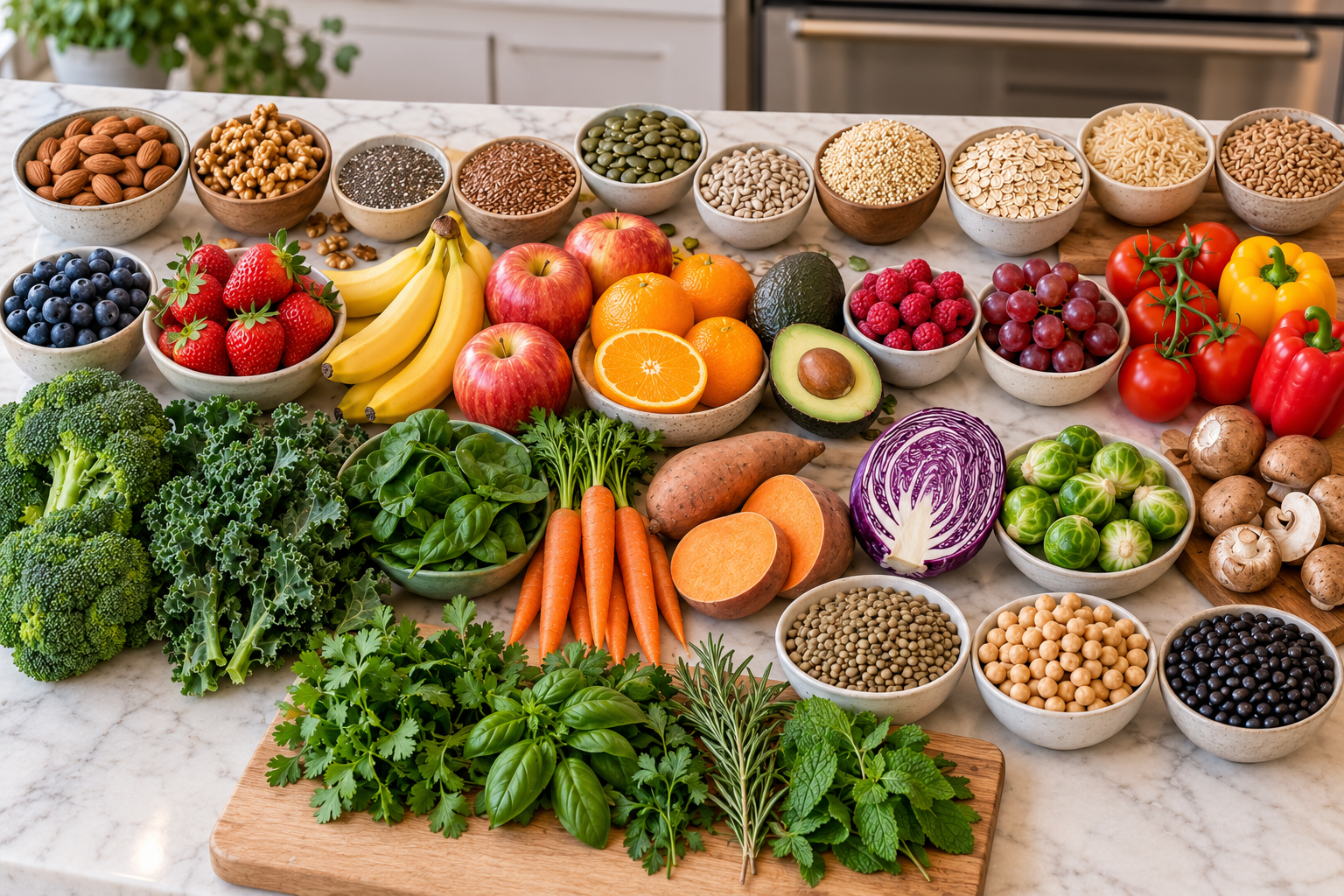
That means gradually adding foods such as vegetables, fruit, beans, whole grains, nuts and seeds, rather than trying to meet the entire target with one very ambitious breakfast.
Ilana Schachter, RDN, a registered dietitian and nutritionist for Consumer Health Digest, also recommends variety rather than relying on a single “superfood.” She advises including protein throughout the day while continuing to make room for fiber-rich plant foods.
If “eat more variety” leaves you staring at the same bag of spinach, Terry-Leonard suggests working toward 30 different plant foods across a week.
Before that sounds like another full-time job, remember what counts: beans, whole grains, nuts, seeds, herbs and spices, as well as fruit and vegetables. Mixed berries, a handful of different nuts or a three-bean chili can introduce several varieties without requiring several separate meals.
Thirty is a useful prompt for variety, not a pass-or-fail test or a proven treatment for menopause symptoms. Research has linked eating more than 30 plant types a week with greater gut microbial diversity, but that association doesn’t establish a prescription for everyone.
Start with what you already eat, add variety gradually and keep your tolerance in mind.
The Type of Fiber Matters, Too
In her guide to gut health in midlife, Laura Kelly, DAOM, L.Ac., Dipl. OM, highlights psyllium, a soluble fiber that forms a gel and holds water. It can help soften hard stools and firm loose ones, and it tends to produce less gas than some rapidly fermented fibers.
Inulin and chicory root fiber, found in certain prebiotic powders and packaged foods, may increase gas. If your new gut-health product has left you feeling more inflated, check the ingredients.
If you try psyllium, start gradually, follow the directions for taking it with water and ask a pharmacist about spacing it from medications. More is not automatically better, particularly when you’re increasing several sources of fiber at once.
Fermented Foods Are an Option, Not Another Assignment
Meilunaite likes including fermented foods in her routine and recommends introducing them gradually, too.
Schachter points to a 2021 randomized trial by Wastyk and colleagues in which a diet high in fermented foods increased microbiome diversity and reduced several markers of inflammation. It’s promising research, but it wasn’t proof that fermented foods treat menopause-related digestive symptoms.
You can try yogurt with live cultures, kefir, kimchi or sauerkraut according to what you enjoy and tolerate. You don’t need to force yourself to eat something you dislike because someone has declared it essential for your microbiome.
“Use fermented foods as an optional addition—not a requirement,” Schachter advises.
If you enjoy them, there’s room for them. If they make you uncomfortable, that matters more than their reputation as a wellness food.
You Probably Don’t Need a Shelf Full of Supplements
Digestive discomfort makes an excellent sales opportunity. There is always another greens powder, probiotic or enzyme blend promising to be the thing you’re missing.
“Women do not need a shelf full of gut-health supplements simply because they are entering menopause,” Kempf says. “Start with the basics, understand what is actually driving the symptoms, and then use targeted support when there is a reason for it.”
Pont similarly says supplements are not generally required simply because someone is going through perimenopause or menopause. Some may have a role for specific symptoms, but that calls for a targeted decision.
Probiotics are a good example. Pont notes that they sometimes help with bloating, but benefits vary between products and people. They aren’t a guaranteed fix or a necessary purchase for every woman in midlife.
Schachter also encourages women to move away from the idea that gut health requires an expensive collection of products. Her priorities are a varied diet, adequate protein and fluids, movement, sleep and medical care when symptoms don’t seem normal.
Before adding something to your cart, ask what symptom you’re trying to treat and how you’ll know whether the product helps.
Check Your Medication List Before Blaming Lunch
Kelly recommends writing down everything you take, including prescriptions, over-the-counter medicines and supplements, along with doses and recent changes.
GLP-1 and related medications can cause nausea, reflux, early fullness and constipation. Iron and calcium supplements can contribute to constipation, as can some antidepressants, opioid pain medicines and certain antihistamines.
If symptoms appeared after starting a medication or increasing a dose, bring that timing to your prescriber or pharmacist. Don’t stop prescribed treatment on your own.
Terry-Leonard suggests making that review a regular habit: every three to six months, gather the bottles and go through them with your doctor or pharmacist. Include the over-the-counter products you barely think about anymore, such as acid reducers and pain relievers.
Ask what each product is for, whether you still need it, whether the dose remains appropriate and whether it could be contributing to your symptoms. Something being available without a prescription doesn’t make it irrelevant to the conversation.
Relevant surgery belongs in the discussion, too. Kelly notes that persistent watery diarrhea after gallbladder removal can involve bile acid diarrhea, a condition with specific treatments.
Sometimes the useful clue is in your medical history rather than yesterday’s sandwich.
Sleep, Stress and Movement Count, Too
Being told to relax when you’re bloated and miserable is unlikely to improve your mood. But the gut and nervous system do communicate, and stress can worsen digestive symptoms.
Pont recommends regular exercise to support bowel habits and notes that stress can aggravate gastrointestinal symptoms. Meilunaite also includes movement, hydration and stress management among her practical starting points.
Katelyn Fitzgerald, founder and CEO of Luminous Skin Lab, encourages making these habits manageable. Her approach includes protecting sleep, finding a short daily stress practice and moving regularly rather than relying on occasional intense workouts. Yoga is part of her own routine.
You don’t need a punishing exercise plan to begin. A regular walk is a reasonable place to start.
Kelly also recommends addressing whatever keeps waking you, including night sweats and hot flashes. For IBS-type symptoms, she identifies gut-directed hypnotherapy and cognitive behavioral therapy as treatment options to discuss with a clinician.
Stress being part of the picture doesn’t make the symptoms imaginary. It gives you another possible route to relief.
Match the Change to the Symptom
“Gut issues” covers a lot of territory. What helps hard stools may not address reflux, and neither necessarily explains why you feel blocked even when your stool is soft.
Kelly offers several starting points, depending on the main problem:
- Bloating that comes and goes: Try regular meals, reducing alcohol and reviewing recently added prebiotic powders. Avoid sudden large increases in beans or vegetables. Psyllium may be worth discussing if it suits your symptoms.
- Hard, infrequent stools: Adequate fluid and gradually introduced psyllium may help. Kelly also suggests trying two kiwifruit or a serving of prunes daily.
- Straining or incomplete emptying: Try supporting your feet on a footstool, leaning forward slightly and breathing out rather than bearing down. Persistent difficulty deserves a pelvic floor assessment; adding more fiber may miss a muscle-coordination problem.
- Reflux: Try smaller meals, stay upright for two to three hours after eating and review possible medication effects with your provider.
- Loose stools and urgency: Review medications and ask whether lactose intolerance, celiac disease or bile acid diarrhea could fit the pattern.
Choose one change first. Introducing psyllium, prunes and three supplements on the same morning makes it difficult to tell which one helped, or which one made your afternoon considerably worse.
Give Changes a Fair Trial, Then Reassess
Kelly’s guide lays out a three-month approach built around doing things in sequence.
After addressing symptoms that need medical attention, spend about two weeks noticing your bowel habits, bloating, food patterns and medications. A few notes on your phone will do.
Next, work on regular meals, fluid, bathroom habits and sleep. If psyllium is appropriate, introduce it slowly. Kelly recommends allowing three to four weeks at a steady, tolerated dose before judging it.
Then choose one targeted change for your main symptom and assess it over roughly four weeks. Her plan includes a reassessment around eight weeks if you’re still struggling. Depending on the symptoms, the next step may be a dietitian-supervised low-FODMAP trial, a pelvic floor assessment or a gastroenterology referral.
These are checkpoints, not a requirement to wait if symptoms worsen. The point is to learn something from each change rather than keep adding products indefinitely.
Know What Needs Medical Attention
Pont flags persistent changes in bowel habits, blood in the stool, trouble swallowing, unexplained weight loss, severe abdominal pain and significant reflux with vomiting as reasons to seek medical care.
Kelly also highlights new abdominal swelling or bloating that stays constant, unexplained iron deficiency and digestive symptoms that wake you at night. Significant bleeding, black or tarry stools, severe abdominal pain, fainting or persistent vomiting require prompt care.
If gluten seems to trigger symptoms, ask about celiac testing before cutting it out, because removing gluten can affect the results.
And keep colorectal cancer screening on your list. Pont highlights that U.S. guidelines recommend starting at age 45 for adults at average risk. Your own starting point depends on your location, history and risk factors. Symptoms need assessment regardless of whether you’re old enough for routine screening.
You don’t need to arrive at an appointment knowing what’s wrong. Explaining what changed, when it started and how often it happens is useful information.
Midlife gives us enough things to navigate. Figuring out your digestion should come with practical advice, appropriate care and fewer expensive guesses.
This article is for general education and does not replace individual medical advice.
Is your digestive system the only thing acting up in midlife? If not, check out Tired of Being Tired? Perimenopause May Be Part of the Story for a closer look at why your energy levels might be changing, too.