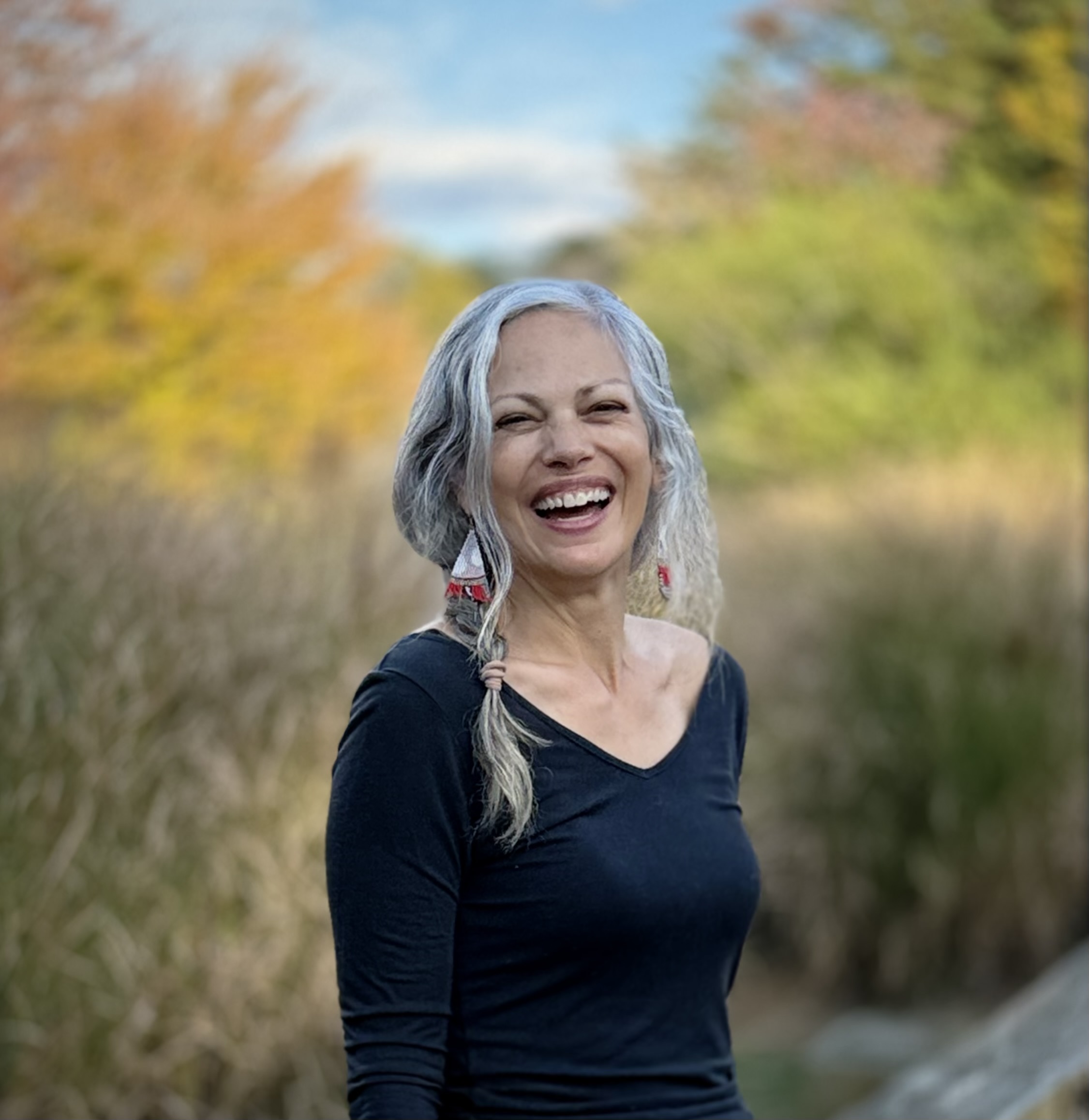
Maria Meitern

It is surprisingly difficult to be unhappy when your life looks enviable. Crying in a beautiful house feels administratively incorrect when the kitchen is marble and the mortgage is paid. On paper, everything works and nothing in the room cooperates with despair. The dog appears emotionally regulated.
We tend to link distress to deprivation. Remove financial pressure, instability or constraint and, by common logic, peace should follow. There is no obvious villain left to blame and so the question turns inward. If nothing is wrong out there, perhaps something is wrong in here. Dissatisfaction starts to feel unjustified. We understand scarcity but are less comfortable with the idea that somebody can have enough and still want something more.
By almost every conventional measure, my life has been extraordinarily fortunate. I am married, have healthy children and inhabit a life that is objectively difficult to complain about. Friends have occasionally looked genuinely puzzled when I try. Why? It is not an unreasonable question.
Gratitude has become something of a moral obligation. To admit dissatisfaction when nothing is wrong sounds self-indulgent. Once you have enough things to be grateful for, people seem to assume gratitude should become your permanent state of mind.
Motherhood complicates this further. It is obviously love, but it can also become an identity and, whether we admit it or not, sometimes a performance. There is the attempt to get the balance between warmth and discipline approximately right, while being observed, mostly by other women who are also observing themselves.
For years, being needed gave my life a very clear structure. Small children require everything. Their needs are practical and immediate, leaving little room for existential speculation. There were school runs, missing shoes and forms that should have been signed yesterday. Life, in its relentless practicality, was rather good at protecting me from questions about what I wanted from it.
My ambition didn’t disappear when I stopped working. I think, rather uncomfortably now, that I transferred most of it to my daughters, and their achievements began to feel like a continuation of my own. A top grade, a place at the right school and, hopefully one day, a place at a top university. I particularly notice it when one of them comes home with an excellent result. I’m delighted for her, obviously, but also feel a rather unattractive flicker of personal triumph. As though somewhere, on an invisible maternal league table, I’m moving up a place.
I rationally understand that their achievements are theirs, but I also know how easily the distinction becomes blurred. When someone says their teenager got into an Ivy League university or Oxbridge, we often turn to the parents and say, “Well done.” As if they got in too.
Perhaps some of the competitiveness around motherhood comes from this. When a woman steps away from her career, it becomes less obvious where to put her ambition. Children offer an almost irresistible alternative scoreboard and their achievements can become evidence that we are doing well.
Meanwhile, my husband has his career and daily battles. There is somewhere for all of that energy to go and an external structure that tells him, more or less, whether he is progressing. Mine became harder to locate. For years I talked about eventually returning to work, while becoming remarkably accomplished at not actually returning to it.
And then the children grow up enough for the rhythm to change. This summer both girls were away and I found myself looking at several almost empty days in my diary. No dinners to cook and nobody else’s timetable determining mine. I had spent years imagining this kind of freedom. Faced with it, I felt strangely redundant.
Obligation tells you what to do. Freedom asks what you want to do, which turns out to be a considerably more difficult question.
For most of history, identity arrived largely pre-installed. Religion, family and geography answered many of the questions about how to live. We have considerably more choice now, which is obviously a good thing, but choice has its own problem. Once you are free to construct your life, you also become responsible for whether that life feels convincing.
And so, at some point, I found myself asking a slightly different question. Does my life actually feel like mine?
That question eventually found its way into my memoir, Mum Interrupted: Postcards from a Perfect Life. I thought I was writing about motherhood, loneliness, ambition and expatriate life. Only later did I realise I was mostly writing about the distance between how a life looks from the outside and how it feels from within. Other people saw the postcards while I was trying to understand the person holding the camera.
Perhaps this is why these feelings can be particularly difficult for women whose lives continue to function perfectly well. Bills are paid and holidays booked. Children are fine. The marriage is intact. Nothing has collapsed dramatically enough to justify a crisis. There is no obvious emergency. Just the far less impressive question of what happened to you somewhere inside a perfectly functional life.
So you continue. You arrange things, answer messages and remain grateful. You may even be happy much of the time. Happiness and dissatisfaction, I’m learning, are not necessarily opposites. You can love the life you have and still wonder about the parts of yourself that became less visible inside it.
I no longer think that means the life I chose was wrong. It certainly doesn’t mean the love was false or that I am insufficiently grateful. Perhaps getting what I wanted was simply never going to answer every question I had about myself.
Meanwhile the house is quiet, the fridge is full and the dog sleeps.
Maria Meitern is the author of Mum Interrupted: Postcards from a Perfect Life, a literary memoir about identity, belonging and the parts of ourselves we edit out in order to fit in. Drawing on her expatriate life across Finland, Estonia, Japan, the UAE, Monaco and the UK, she writes about motherhood, anxiety, shame and the gap between how a life looks from the outside and how it feels to the person living it. She currently lives in London, England with her husband and two daughters.
What happens when midlife doesn’t feel quite the way you thought it would? Read Turning 50 in the Wrong Future for another perspective on reckoning with the life you imagined and the one you’re actually living.