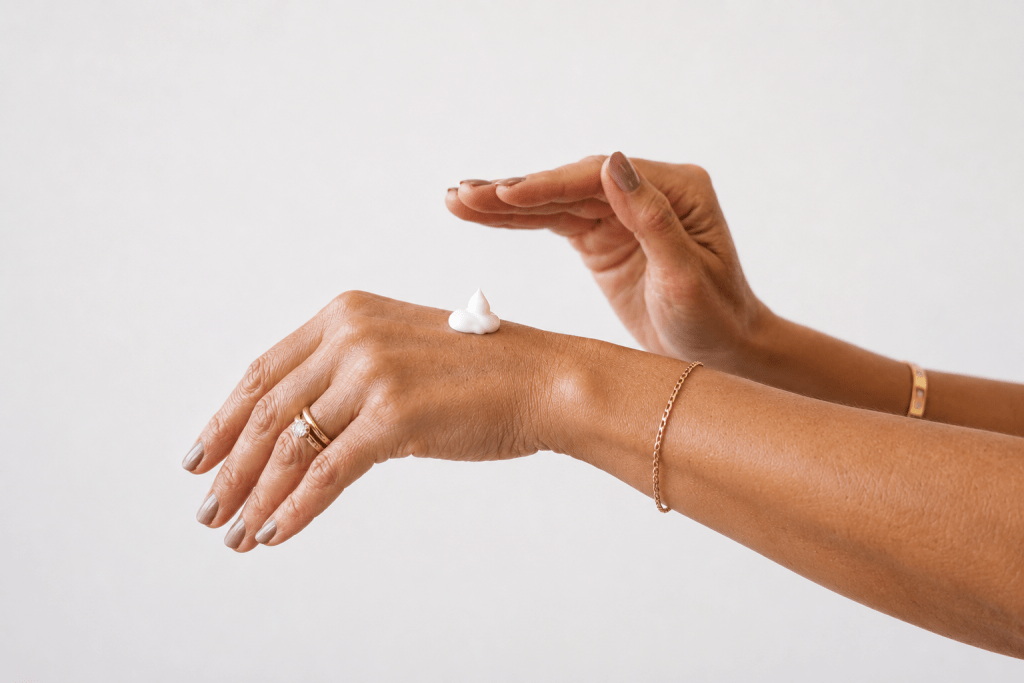
As we go through perimenopause and menopause, our skin doesn’t have to show signs of aging faster than we’d like. With the power of peptides, your eyes can look brighter, your complexion smoother, your skin more radiant, and wrinkles? LESS noticeable!
The goal isn’t to hide your age—it’s to confidently wear it and give people something to admire.
Peptides are one of skincare’s biggest buzzwords, but is the hype real? She’s Got Issues decided to find out. We sat down with Dr. Lindsey Zubritsky, MD, FAAD, a board-certified dermatologist better known online as The Derm Guru to uncover the power of peptides, how they target fine lines, and whether they really are the game-changing ingredient your skin has been waiting for.
What exactly are peptides and why are they suddenly part of everyday beauty and wellness conversations?
Peptides are short chains of amino acids, the same building blocks that make up the proteins in your skin, like collagen and elastin. A lot of the current buzz started with injectable peptides in the wellness space, but topical peptides are also having a moment in skin care for their anti-aging benefits, like improving firmness, boosting collagen, and smoothing fine lines.
Are all peptides the same or are there different purposes for each?
There is a wide range of peptides, and each one is designed to do something different. Signal peptides prompt your skin to make more collagen, carrier peptides deliver the minerals it needs to repair, and neuropeptides soften the look of expression lines by gently calming surface muscle activity
The real advantage comes when a formula combines several at once, which is exactly what OLAY does with its Hexa-Repair Peptide Complex™ in the Regenerist Treatments collection, paired with Triple Collagen Peptide that supports your natural collagen, so multiple mechanisms work together.
Why is misinformation about peptides spreading so quickly?
The biggest issue is that the word peptide gets used to describe very different things depending on the context. I’ve noticed that injectable peptides, oral supplements, and topical skin care peptides are often grouped in conversations, even though they have very little in common.
Are peptides really the future of anti-aging or are the expectations unrealistic?
I think both can be true at once, because peptides are one of the most exciting tools we have, and they are remarkably well-tolerated, but they are not a replacement for daily sunscreen or an in-office procedure. The realistic way to see them is as a complement that delivers meaningful, visible improvement over weeks rather than an overnight transformation.
How do the peptides work and is efficacy affected by cost?
When collagen in your skin breaks down naturally, the leftover fragments send a signal to your body to create more. Topical peptides essentially mimic that same signal, which is why consistent use over time leads to firmer, smoother-looking skin. As for whether you need to spend more to get better results, the short answer is no. What drives performance is the quality of the formulation and the stability of the ingredients,
What are the biggest myths influencers and social media creators repeat about peptides?
The most common myth is that peptides are basically topical Botox, which creates unrealistic expectations. Some peptides do address fine lines and wrinkles, but the reality is that the change is subtle and builds over time rather than showing up overnight.
What do you wish more women in their midlife knew about peptides?
The skin changes women notice during perimenopause and menopause are largely driven by collagen loss tied to declining estrogen, and peptides are one of the most effective and gentle ways to address that. A consistent, well-formulated peptide product can restore firmness and resilience without a complicated routine or a big budget.
What are the best peptides for beginners?
I always recommend starting with collagen-supporting peptides because they are the most forgiving and the easiest to work into any routine without causing irritation. That is why I like the OLAY Face & Neck Lifting Treatment and the Wrinkle Correcting Treatment Serum as entry points. The Face & Neck Treatment pairs the Hexa-Repair Peptide Complex with Pro-NAD+ to renew and visibly lift, while the Wrinkle Correcting Serum combines it with Pro-Retinol to target both dynamic and static wrinkles, so either one gives you a straightforward starting place with results you can actually see.
Dr. Lindsey Zubritsky, MD, FAAD, is a board-certified dermatologist better known online as The Derm Guru. She has amassed over 3.4M+ followers across her TikTok, Instagram and YouTube pages where she shares digestible skincare tips and product recommendations. A frequent media contributor and speaker, Dr. Zubritsky is passionate about making dermatology accessible and empowering people to make informed decisions about their skin health.
Your skin isn’t the only thing that changes during menopause. Browse our Menopause Library for expert-backed advice on everything from hormones to healthy aging.