By Elsa Ramos Elías, Ayurveda Specialist & International Speaker
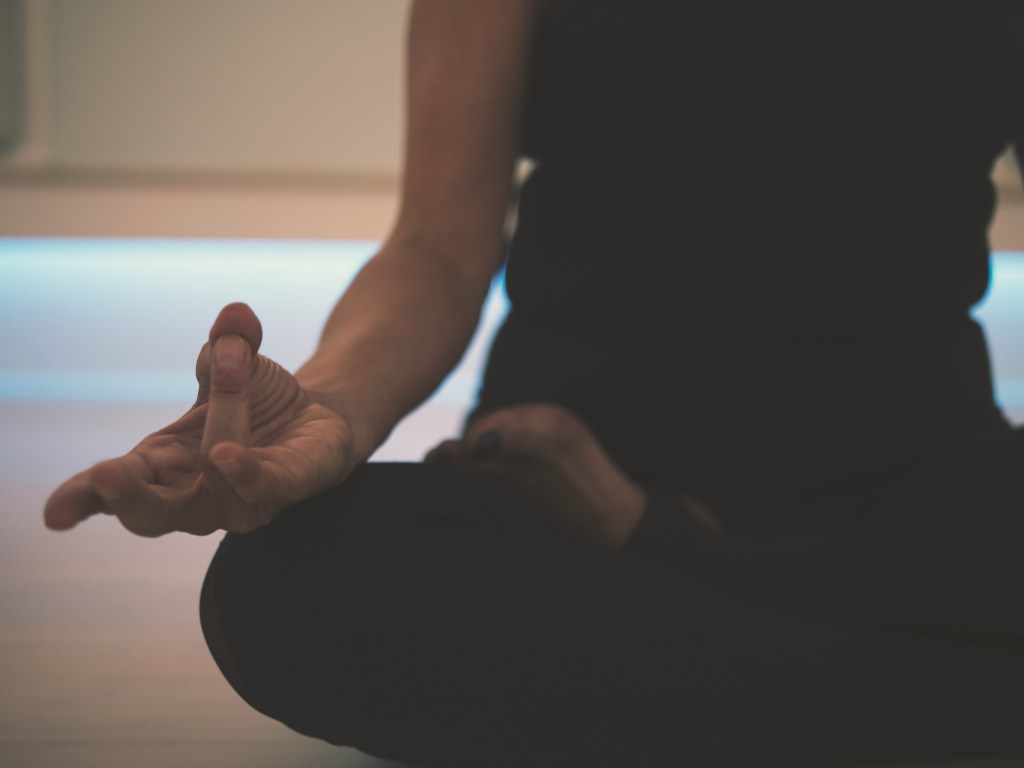
You had read all the benefits of meditation, and really wanted to give it a go.
In your first class, you were probably told to empty your mind, just to observe with despair that your brain would not stop reviewing your shopping list. Or you were instructed to visualise beams of light and a smiling Buddha, but ended up facing a black empty space with frustration.
These are two very frequent scenarios result of group meditation classes and the wellness industry offering solutions that “work for everyone.”
I have been practising and teaching Ayurvedic traditional medicine for over a decade. In this tradition, meditation and breathwork are not just relaxation tools or “nice-to-dos”. They are an essential part of any treatment plan, and the practices are chosen according to each person’s state and constitution. Ayurveda and sister science yoga are the ancient traditions from India from which most meditation and breathwork practices originate.
Why the same practice does not work for everyone
Ayurveda recognises three main mental and physiological states, each one benefiting from different types of diet, routines and also meditation practices.
In the first state that we call vata the mind is very creative but usually overloaded with stimuli and tends towards anxiety the brain feels constantly wired-up. On a physical level bloating and constipation are very common. When we try to impose complete stillness and silence, it produces resistance and more anxiety.
The second pattern is called pitta, it is characterized by a very sharp intellect, and a competitive nature. You want to do the meditation perfectly and that is your main block. Feelings of frustration or anger can be common. On a physical level you may experience symptoms like acidity, high blood pressure, hot flushes amongst others.
The last one, kapha, is the most stable on the mental level, calm and steady under most circumstances. Sometimes it is difficult to find motivation to do things, and can gain weight very easily.
Understanding your physical and mental state to adjust your practice is especially relevant for women since our hormonal landscape changes dramatically monthly and throughout our lives, and this directly affects our nervous system. A practice that worked perfectly for you in your thirties might not offer the same effects when you enter perimenopause or menopause.
What happens when you are unable to visualise?
For many starting meditation it can be extremely frustrating not to be able to visualize and very often it is a reason to drop the practice altogether.
Visualisation techniques have become more and more popular, they have been long used by elite athletes to increase performance, and they are present in most manifestation programs, since they are the best practice to reprogram your subconscious mind.
In Ayurveda, the capacity for visualisation is linked to tejas, a quality of mental clarity that is depleted by poor sleep, certain foods, and specially by high use of screens.
When tejas is low, the inner screen switches off, a practice called trataka, steady gentle gazing at a candle flame, can help rebuild this capacity, but it requires much dedication and time.
An easy quiz to find your starting point:
When I meditate:
A: My mind doesn’t stop
B: I sit down and immediately start judging whether I’m doing it right
C: I keep drifting away or falling asleep
When I have trouble sleeping, what usually happens?
A: I find it difficult to fall asleep, my mind doesn’t switch off
B: I fall asleep easily but wake up in the early hours, often feeling irritable and sometimes experiencing hot flushes
C: I sleep long hours but wake up feeling heavy and tired
My dreams tend to be:
A: Very active, everything moves fast. I jump from one dream to another, with unfinished situations
B: Very intense, there might be problems that I need to resolve, sometimes violent situations or people
C: Hard to remember, usually they involve nature or familiar places
Mostly A (vata): The mind is overloaded with stimuli and needs some preparation before the practice. Try to reduce the use of screens during the day and 30 minutes before you start your meditation. Five minutes of alternate nostril breathing (nadi shodhana) followed by a guided meditation of a body scan, will make you feel more grounded.
Mostly B (pitta): The mind is overheated and needs practices that are cooling in nature and non competitive. Practicing sheetali breathing (breathing through your rolled tongue) whenever you feel your emotions rising, a walk in nature, or yoga nidra are the best practices for you.
Mostly C (kapha): Your body and mind need more energy to sustain a meditative state, try a dynamic breathwork like breath of fire or kapalabhati, before engaging in meditation. Active practices like reciting a sound or mantra are more suited in this case.
Our inner state fluctuates every day and every month, and our meditation practice should be adjusted accordingly. In Ayurveda, observing our physical and mental state is where the practice begins, and eventually it becomes the practice itself.
Elsa Ramos Elías is an Ayurveda specialist and international speaker with advanced clinical training in Ayurvedic detox therapies and women’s health. She helps women reconnect with their vital energy through personalised programmes that combine ancient science with the demands of modern life. She has served as keynote speaker at international traditional medicine and spiritual health conferences, including events alongside New York Times bestselling author Dr. Zhi Gang Sha. Her practice and digital programmes are at elsa-ramos.com/en/home-english
Curious about other approaches to mindfulness and emotional well-being? Click here.