Shanna Pearson
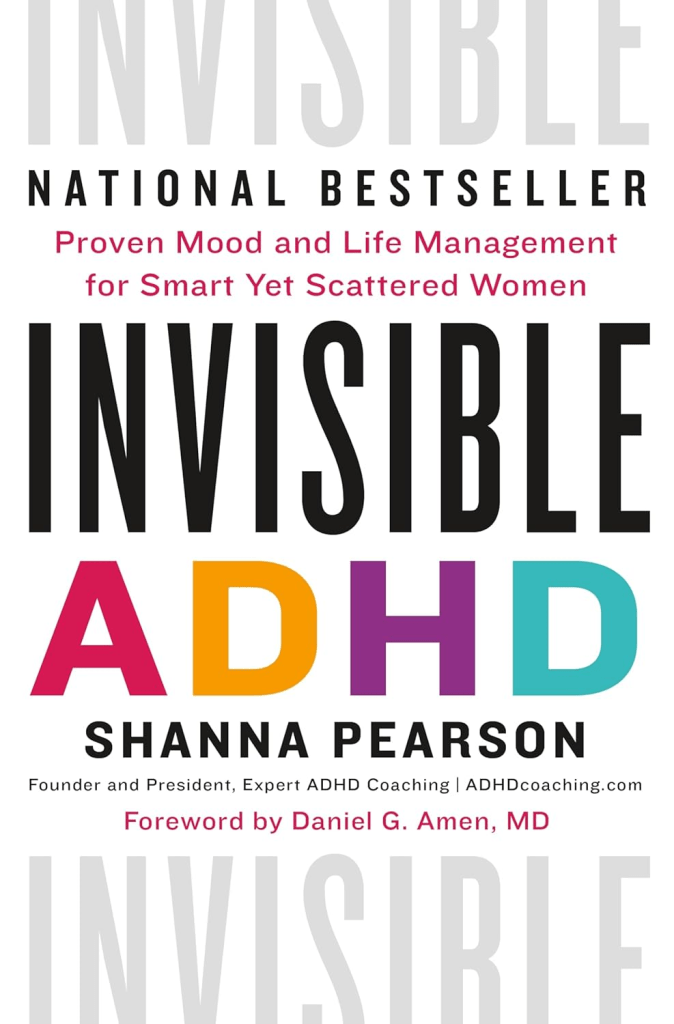
This is an excerpt taken with permission from the book Invisible ADHD: Proven Mood and Life Management for Smart Yet Scattered Women
Even today, ADHD in women is under-recognized, and we are still almost twice as likely to go undiagnosed or misdiagnosed. This being the case, many girls and women with ADHD suffer in silence and confusion, flying completely under the radar for their entire lives, their invisible symptoms making everything they do more difficult.
Both as children and adults, we often feel misunderstood, struggle to fit in socially, find it challenging to make and keep friends, and generally feel as though we’re operating on a completely different wavelength than everyone else. These girls often grow into intelligent women living unbelievably stressed-out, lonely, and frustrating lives—achieving well below their potential despite their exhaustive efforts. They never accomplish what they are capable of and deserve, feel discontented and overwhelmed nearly every moment of every day, and worse, have chronically low self-esteem.
Growing up, many of us who struggled to read social cues and make friends in school also struggled with primary relationships at home with our siblings and parents, who also never seemed to understand why their daughter or sister with ADHD (still) behaves the way she does. On one hand, because of our history of not feeling accepted or like we belong anywhere, even at home with our family, many of us are hesitant to trust and more wary of entering into close, intimate relationships. But when we’re in, we tend to be all in, particularly if we feel that we’ve found someone who finally understands us—that is, until we begin to second-guess ourselves, which will likely happen eventually.
On the other hand, because of our brains’ need for stimulus, commitment to the same person over longer periods of time can also be challenging. When the brain is seeking out new and interesting input, it is often hard to be completely present with—and committed to— partners, friends, or family. There is always something to distract you from what’s right in front of you. Which is why you may be averse to commitment. Sound confusing? Welcome to the world of ADHD!
Many of us also tend to experience more upheaval in our relationships and be more easily triggered, leading to outsize reactions to perceived criticisms. We find it difficult to remain in the calm, neutral zone for long because it’s simply less interesting than the alternative. So, when things are “too quiet,” we may subconsciously or unintentionally jack things up a notch by stirring up conflict!
Another severe challenge many women with ADHD experience is rejection sensitivity dysphoria (RSD)—which is an extreme and significantly heightened emotional reaction to feeling rejected, or the fear of possibly being rejected. A hypersensitivity to perceived criticism, even when there is none, can send a woman, who was otherwise having a relatively decent day, into a full-on panicked spiral of upset and excessive negative self-talk that can last for days or weeks. Sometimes it’s so severe that they avoid all social situations to stay safe from interacting with others and potentially feeling rejected.
Beyond our challenges with interpersonal relationships, we tend to overlook the struggles we face in our relationship with ourselves. This is especially prevalent for many high-achieving women navigating their careers. No matter how much time you’ve devoted to your education, the depth of your experience, your incredible skills, or the extent of your training, your success can still feel like a fluke! You may experience an underlying feeling that you will be “found out” by coworkers or supervisors, and at any moment, you’ll be called into a meeting and be told that you’re fired. Some women get into a habit of quitting job after job, even when things are going great, in the belief that it’s easier to “get out before being found out.” Since ADHD goes hand in hand with low self-esteem and insecurity, feelings of unworthiness, self-doubt, or distrust in your well-deserved success are almost never an accurate reflection of your true abilities or performance.
Because estrogen plays a key role in regulating dopamine levels in the female brain, and women with ADHD have naturally lower dopamine levels and poor emotional regulation to begin with, fluctuating estrogen and other hormones significantly affects your already challenging ADHD symptoms and sets the stage for a colossal roller coaster of extreme moods throughout your life.
In fact, it’s fair to say that the constant fluctuation of hormones that women experience every single month (for close to forty years!), in addition to huge hormonal shifts during pregnancy, perimenopause, and menopause—essentially throughout our entire lifespan—puts women with ADHD at a major disadvantage compared to men with ADHD, who experience far fewer hormonal changes.
During PMS, our ADHD symptoms often worsen because of decreasing estrogen levels, which can also explain why conditions like PMDD—a highly intensified form of PMS—affect women with ADHD about one and a half times more than non-ADHD women!
Pregnancy can also amplify our ADHD challenges, turning the emotional roller coaster of this time into an emotional rocket ship. “Pregnancy brain” becomes “ADHD-pregnancy brain”—especially if you’ve had to stop taking your ADHD medication. The rapid post-pregnancy decrease in estrogen can lead many women to report worsening ADHD symptoms at the exact same time that their entire lives are flipped upside down with their new (and beautiful) responsibilities. Sadly, women with ADHD are also up to five times more likely to suffer from postpartum depression and anxiety.
By the time we reach menopause, estrogen levels decrease by up to 65 percent(!), with the accompanying effect on our dopamine levels, triggering intense mood swings, focus issues, and a worsening of ADHD symptoms. Many women report this stage of life to be their most challenging, as the coping mechanisms that served them well throughout their entire lives effectively stop working. This exacerbation of symptoms often leads women who never suspected they had ADHD to seek a diagnosis for the first time in their fifties or sixties.
As a woman with ADHD, you are impacted by unique challenges— everything from getting a proper diagnosis, to coping with the impact of regular hormone fluctuations, to the intensity of living in a constant deluge of overwhelm, to the emotional impact that ADHD has on every single area of your life.
At least there’s one thing we can all agree on: having ADHD is never boring!
Excerpt reprinted with permission from the book Invisible ADHD: ProvenMood and Life Management for Smart Yet Scattered Women
—
Shanna Pearson is the founder, program creator, coach trainer and coaching director of Expert ADHD Coaching, which provides concierge one-on-one personalized, action-based ADHD coaching for adults and is the largest ADHD coaching program of its kind in the world. Since 1999 she has been privileged to serve tens of thousands of clients and train hundreds of coaches. Her book, Invisible ADHD: Proven Mood and Life Management for Smart Yet Scattered Women, is available now. More at www.shannapearson.com.