Samina Bari
On love, loss, and learning how to show up when life breaks you.
The night my husband died, I was editing the final chapter of a memoir I’d spent three years writing. I promised to share it with him the next morning. That moment never came.
When Doug died suddenly in an accident in 2023, the world as I knew it ended in an instant. Our children lost their father, and I lost the man who had been my partner and part of me in every sense for over 21 years. I was left trying to survive a life that had collapsed overnight.
In the weeks and months that followed, friends and family showed up with food, flowers, and the best of intentions. But what I quickly realized is that most of us have no idea how to support someone who is grieving the loss of a spouse because it is an unimaginable loss like no other. We’re terrified of saying the wrong thing and uncomfortable with the situation, so we either say the wrong things or stay silent.
We live in a culture that celebrates beginnings, such as births, weddings, new jobs. But we recoil from endings. Death makes us uncomfortable. So we say things meant to comfort but that often hurt the bereaved: “God only takes the good ones.” “You’re so strong.” “He’s in a better place.” What I heard instead was: “Please stop crying so I don’t have to feel this.”
The death of a spouse is the single-most devastating occurrence in a person’s life. Why? Because the world sees us as the same person, but we are not. We have lost our identity, our past, our present, our future, our dreams. We are adrift, left to navigate a new world alone.
One of the hardest moments for me came when someone first called me Doug’s “widow.” The word felt ancient, hollow, and wrong. Widow is derived from an Old English word meaning “empty.” But I am not empty. I am a woman whose husband died, whose heart still loves him, and is full of love for my children; I am far from empty. The language we use matters. It shapes how others see us, and more importantly, how we see ourselves.
The truth is, our grief it’s not yours to fix;.it’s a physiological response marked by increased cortisol levels that alters our physical, mental and emotional state. What bereaved spouses need most isn’t advice, meaningless platitudes, or pep talks; it’s presence. Sit beside us. Say their name. Don’t rush the silence. Just stay.
Parenting through grief is another kind of heartbreak. My daughters were only seven when their dad died. I had to be the grown-up when I could barely breathe. I remember one of them saying, “Everyone is here for you, but no one is here for us.” She was right. That’s when I realized how invisible grieving children can be.They need to be seen, spoken to, and reminded that their parent mattered. I don’t need to be told they’re “resilient” because children who experience this loss and trauma are not resilient.
It took me nearly a year to function again. I forgot to eat, forgot how to drive, forgot who I was. But grief has a strange way of reshaping what it takes from us. It strips away everything unimportant and leaves behind what’s real. Love. Presence. Compassion.
When someone you love loses their person in life, don’t worry about the perfect words. You can’t fix the unfixable, and they don’t need you to try to fix them. Just show up and stay. Because the truth is, one day, you’ll need that same kind of care, too.
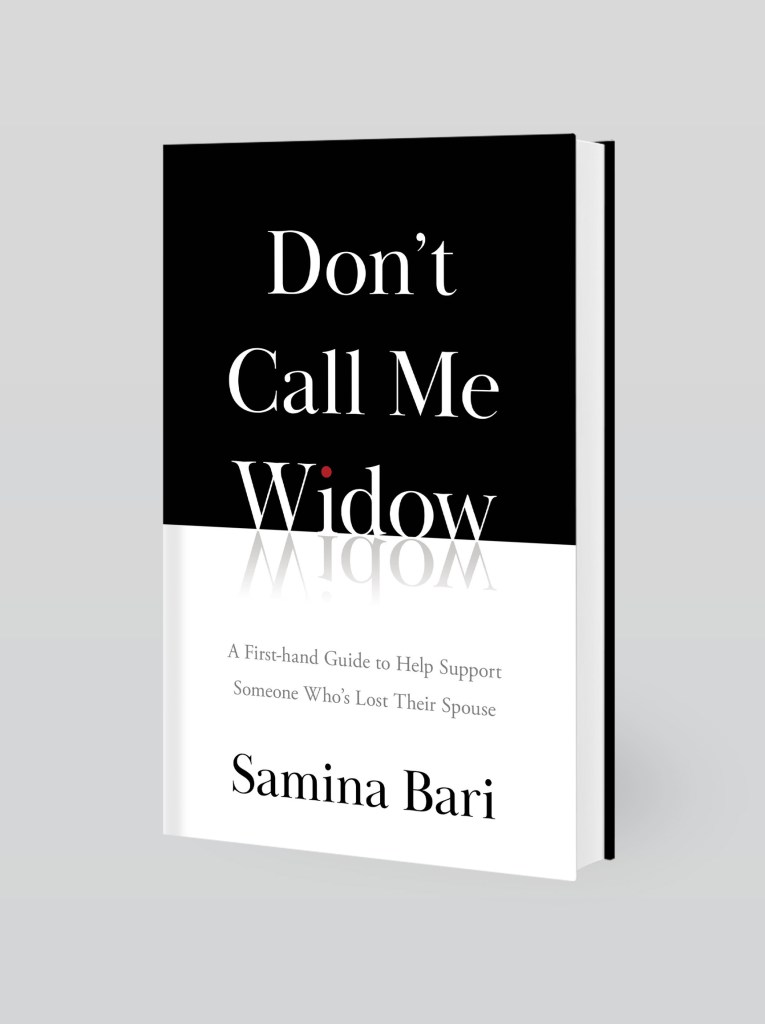
My new book, Don’t Call Me Widow: A First-Hand Guide to Help Support Someone Who’s Lost Their Spouse, was born from that understanding. It’s a love letter to the people who show up, an easy-to-use guide for those who don’t know how, and a reminder that whether or not you want to think about it, death is inevitable.
Samina Bari is a corporate leader, 2x best-selling author, and advocate whose life and work explores how we navigate loss with courage and grace. A trusted advisor to CEOs and boards with over $40 billion in M&A transactions to her credit, she brings the same clarity and strength that defines her corporate career to her deeply personal mission of helping others rebuild after loss.
After losing her husband suddenly in 2023, she began speaking and writing openly about the life-altering impact of spousal loss and the process of rebuilding after it. Her second book, Don’t Call Me Widow, offers a first-hand guide for supporting those who’ve lost a spouse, and her podcast After Life continues that mission, helping others show up with compassion in life’s hardest moments. This follows her first book, I Can, I Will, & I Did: Lessons on Life, Love, and Leadership, which shares her insights on perseverance and renewal.
Through both her professional and personal journeys, Samina brings rare depth to conversations about grief, growth, and human resilience. More at SaminaBari.com.