At 54, I find myself navigating perimenopause while clinging tightly to the routines that have grounded me for years. I’m an avid exerciser and a vigilant eater, vegan for over seven years, and someone who thrives on structure. I rise at 4:00–4:30 a.m. every day — not as a phase, but as a long-standing habit — and I exercise early, often on an empty stomach or with nothing more than a small banana and a teaspoon of peanut butter. My routine has included intense cardio like treadmill running and walking, Pilates, varied weightlifting, and 6–10 kilometres of walking daily, with structured workouts five days a week. Movement has always been my anchor.
Food matters to me for reasons far beyond appearance. If I’m honest, I’m a bit of a control freak, and knowing what goes into my body gives me a sense of predictability. Living with IBS, however, has taught me that control is often an illusion. The same meal that feels nourishing one day can wreak havoc the next, and lately I find myself wondering whether perimenopause has added yet another unpredictable layer. Who the heck knows anymore? I am vegan, but very much for myself. Something in my brain switched after getting a dog, and now I genuinely cannot believe I ever ate meat. That said, I will never shame anyone into eating vegan — I actually love making a meal for someone and casually mentioning afterward that it was vegan, just to watch their surprise.
Exercise truly clicked for me in my early 40s. By 45, I had the body I wanted — strong, lean, capable — and more importantly, I felt at home in it. Exercise is my happy place. It floods me with endorphins and gives me the mental pump I need to face the day. I know myself well enough to know that if I don’t work out at 5 a.m., it simply isn’t happening. Life, work, and fatigue will get in the way. Those early mornings are non-negotiable.
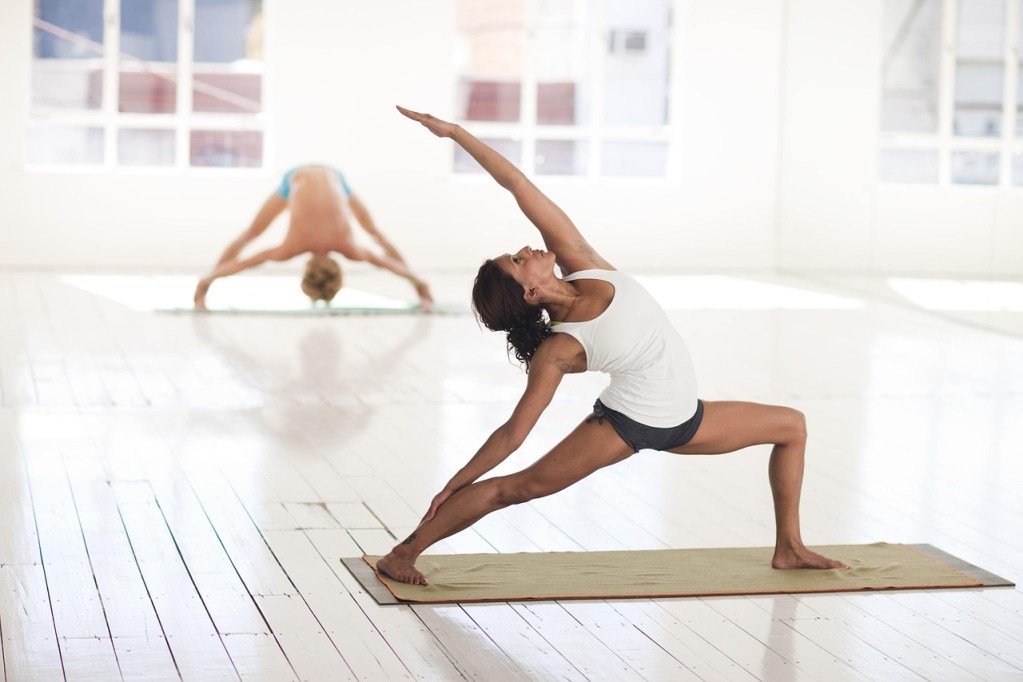
Pilates, in particular, has been transformative. It makes me feel looooong in a way I didn’t realize I needed. Eight years ago, I fractured my back and underwent spinal fusion and decompression surgery. Since then, there are days when my back feels like one solid block, rigid and unyielding. Pilates allows me to find flexibility where I thought none existed, gently reminding me that my body is still capable of movement and softness. Still, I often feel like my body isn’t quite mine anymore — not in the way it once was — and that loss of familiarity is unsettling.
Then perimenopause arrived and rewrote the rules entirely. After 35 years of a flawless 28-day cycle, my periods became erratic and shockingly heavy. We’re talking waterfalls — soaking a super-plus tampon in under an hour, leaking during jumps or even laughter. After one particularly horrific episode in August, where seven days’ worth of blood seemed to arrive all at once, I found myself on a rafting trip dealing with what can only be described as a kayak-flooding situation, witnessed by a stunned 16-year-old helper. Bloody embarrassing — pun very much intended. Now, I’ve gone four months without a cycle, and the unpredictability feels almost worse than the chaos that came before.
Despite no meaningful changes to my diet or activity level, weight management has become harder over the past few years. The math no longer works the way it used to. Effort doesn’t equal outcome, and hormones appear to be quietly shifting the goalposts. It’s frustrating, especially after decades of consistency and discipline. That said, age does offer perspective. The body I have now — even if I don’t love it the way I once did — is the body I desperately wished for as a teenager. Life is funny like that. I sometimes think about the girls I envied in high school, many of whom are now very typically middle-aged, and I can’t help but wonder what they might think of me now.
In response to these changes, I’m adapting rather than surrendering. After four months focused primarily on Pilates, I’ve shifted into a hybrid program that blends weightlifting and cardio. I know my body — or at least I did before this beast took over and crowned herself queen — and I know I need a good sweat, especially in the dead of winter. Perimenopause has turned me into a walking climate anomaly: freezing one minute, drenched in sweat the next. Sometimes my husband and I walk outside together looking like we’re in two completely different weather systems.
At 5 a.m., I’m down in the basement with my weight bench, mat, and floor space, moving and grooving while moaning and groaning loudly enough to wake the gaggle of men upstairs. My dog faithfully follows me down, then promptly snores on the nearby bed to get her required 18 hours of beauty sleep. It’s not glamorous, but it’s mine.
I want to find my way back to feeling at home in my body in a way that is sustainable and self-directed. For now, I’m trying to manage without outside intervention. I’m open to exploring medications or hormone replacement therapy if needed, but the cost is intimidating, and there’s a family history of thyroid cancer that adds an extra layer of stress — something I already have in ample supply. For now, I’m experimenting, adjusting, and listening more closely than ever.
This phase has taught me that strength isn’t just about discipline or effort — it’s about flexibility, patience, and a willingness to adapt when the rules change. Let’s see how this tweak performs.
Sheli Stark is a 54-year-old mom to two young adults who balances a career in social services with her work as a certified personal trainer. Fitness is part of her daily life, along with treasured time as an auntie, loving on her dog and cat, and living a vegan lifestyle. When she’s not out walking the dog, she’s usually working on the novel she’s been writing (and rewriting) for the past six years.